Manufacturing

Manufacturing operations increasingly rely on automation, robotics, and real-time data. Common challenges include:

Inconsistent connectivity on production floors

Legacy Wi-Fi systems that cannot support low-latency or deterministic performance

Limited visibility into equipment health and process data

Difficulty upgrading networks without disrupting active production
Manufacturers need private cellular networks that deliver reliability, control, and room to scale.
Ports

Ports operate as high-density, always-on environments with moving assets and large outdoor footprints. Key challenges include:

Inconsistent coverage across yards, terminals, and warehouses

High device mobility involving vehicles, cranes, scanners, and personnel

Congestion and interference impacting legacy wireless systems

Growing automation and tracking requirements
Ports require resilient wireless infrastructure that supports coordination, safety, and throughput at scale.
Energy

Energy operations span wide geographies and critical infrastructure. Common pain points include:

Distributed assets that are difficult to connect reliably

Operational systems requiring secure, low-latency communications

Strict safety and regulatory requirements
Real-time monitoring needs across facilities and field operations
Energy providers require secure, resilient wireless networks that support both reliability and modernization.
Mining
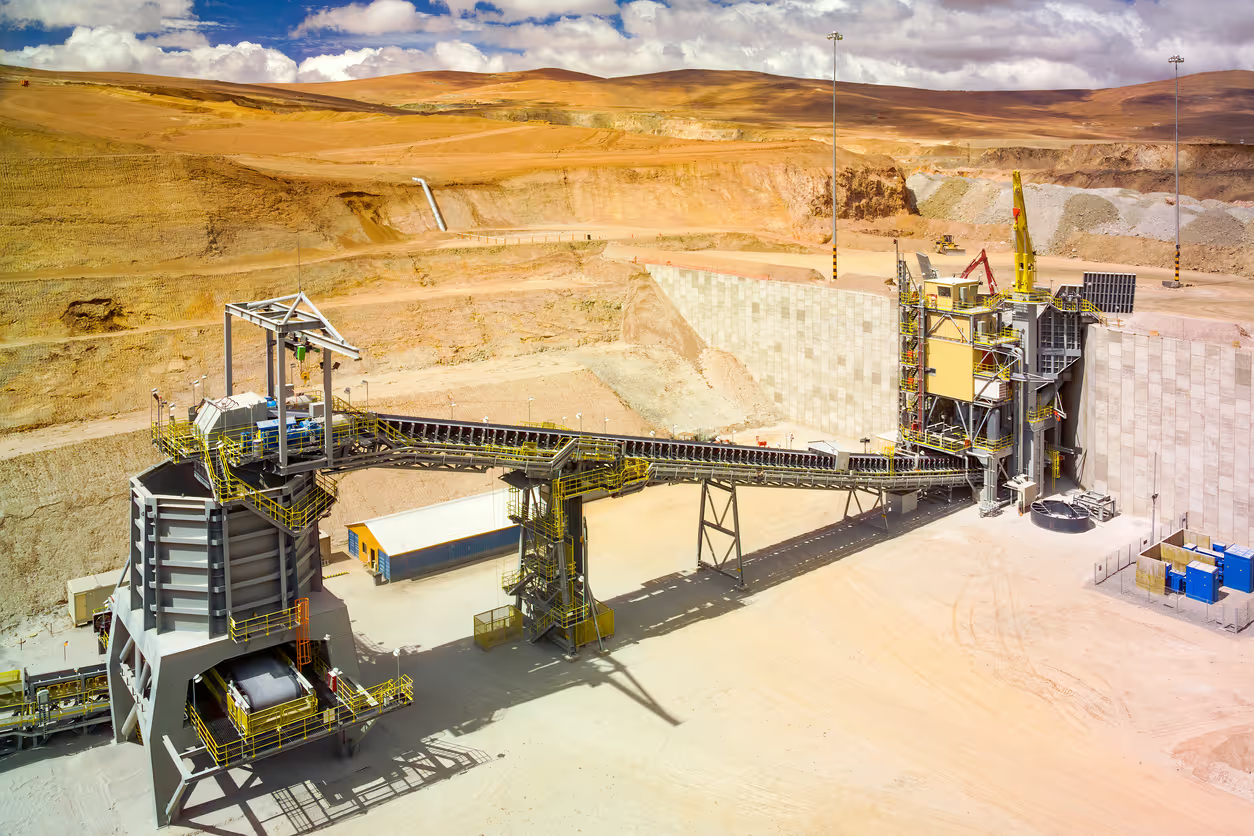
Mining pushes connectivity into remote and physically demanding conditions. Typical challenges include:
Limited or nonexistent public network coverage

Harsh environments that strain traditional infrastructure

Safety-critical communications for workers and vehicles
Support for autonomous or remotely operated equipment
Mining organizations increasingly turn to private LTE and 5G to enable safer, more efficient operations.








.svg)

.svg)
